
COHERENCE THERAPY,
DIALECTICAL BEHAVIOR THERAPY &
EGO STATE THERAPY
CHOOSE THE THERAPY TRACK THAT IS RIGHT FOR YOU
WHAT METHODS DO YOU USE?
Track A: Coherence Therapy
Choose this option if you want to address an overall issue through a focused approach, particularly if you feel stuck or previous therapy has not helped.
OR
Track B: Dialectical Behavior Therapy
Choose this options if you want to be more skillful in your life and relationships, or if you want to improve symptoms of BPD.
OR
Track C: Ego State Therapy
Choose this options if you think you may enjoy psychodynamic work, states-of-self language or need to understand dissociation.
Coherence Therapy
Coherence Therapy is an evidence-based treatment for a range of problems in psychotherapy backed by the science on memory reconsolidation.
-
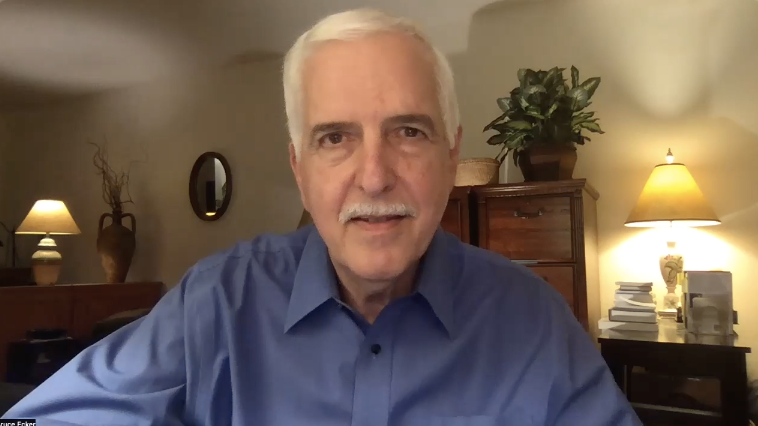
Coherence Therapy is one way of working with the most recent neuroscience of memory reconsolidation. Coherence Therapy was created by Dr Bruce Ecker when he applied memory reconsolidation to the field of psychotherapy.
Memory reconsolidation is the brain’s ability to revisit and revise memory. Many of our psychological problems stem from significant life events when memory is laid down (consolidated) in the presence of strong emotions. In these moments we adopted unconscious programming about how the world works, and what life is like. Since this kind of memory is typically formed early in life, under highly specific circumstances and outside our awareness, in adulthood we are at a loss to explain why certain patterns do not resolve with insight or effort. Memory reconsolidation and Coherence Therapy offer a mechanism for the brain to destabilize existing memory and completely update it with a more reliable and accurate version of how the world works and what life is like.
You can learn more about Coherence Therapy and memory reconsolidation here: https://www.coherencetherapy.org/index.htmtem description
-
A session of Coherence Therapy is experiential, that means, you will be guided to experience your emotions, your thoughts and your physical reactions. You will also talk, of course, but the emphasis is not on thinking and answering questions. Experiential work is done to retrieve information that lies outside of your current thinking and knowledge (if you knew the solution, your brain would already have fixed it). Conventional talk therapy can only work with conscious memory networks and help you counter or modify your current thinking. Coherence Therapy assumes your current thinking is a perfectly coherent symptom for a problem you are solving that lies outside of your awareness.
-
Coherence Therapy can successfully work with any unwanted symptoms that arise out of significant emotional learning: low self-esteem, guilt, loss, anxiety, depression, addiction, psychosis, mood, erratic behavior, hyperactivity, codependency and insecure attachment. Coherence Therapy does not assume that all medical and psychological problems stem from emotional learning. It is not a substitute for medical treatment, crisis stabilization, trauma processing or behavioral change.
-
Coherence Therapy claims to help you through three markers: 1) symptom cessation-the symptom is gone and the behavior has stopped, 2) non-reactivation-the symptom cannot be re-triggered, and 3) effortless permanence-change does not require maintenance or practice. If it doesn’t meet these requirements, change was not “transformational.”
-
You are a good fit for Coherence Therapy is you have a problem or a symptom that bothers you, and you are hoping to learn why it is there and when it will go away. You are a good fit if you can respect the feelings that may come up in therapy. Coherence Therapy has a clear focus and sequential approach; this structure may not be a good fit for everyone. Coherence Therapy is a deep dive, and obviously not suitable when you are in a crisis or feel very fragile.
We have seen that when an emotional learning or schema is the
underlying cause of a therapy client’s presenting symptom, the
schema can be retrieved into direct, explicit experience and then
profoundly unlearned and dissolved by the same sequence of
experiences that neuroscientists identified in reconsolidation
research.
Dr. BRUCE ECKER, developer of COHERENCE THErAPY
who it’s for
Coherence therapy is right for you if you…
Have experienced a difficult childhood or adolescence
Notice destructive patterns in your relationship
Feel ready to experience your emotions
Are willing to be vulnerable in therapy
who it’s not for
Coherence Therapy is not yet for you if you…
Actively struggle with serious suicidal thoughts and self-harming
Your life currently feels chaotic or in crisis
You don’t feel ready to be in touch with inner truth
You have difficulty showing up consistently for therapy
DBT is Life Skills 101.
Maybe you have BPD.
Maybe you just want to be better at life.
Maybe you’re here because someone else needs DBT.
Dialectical Behavior Therapy (DBT) helps anyone build a Life Worth Living.
Dialectical Behavior Therapy is an evidence-based treatment for psychiatric conditions based on emotion dysregulation and suicidal behaviors.
-
DBT is a form of cognitive behavioral therapy (CBT). CBT is the therapy most strongly backed by science. DBT is strongly influenced by behaviorism, so it does not focus on insight, psychodynamics, trauma or your past. DBT is very directive (it tells you what to do) and it holds you accountable.
A DBT Skills Group is one component of standard DBT. In a skills group, you receive the training of Dr Marsha Linehan, the creator of DBT. A typical skills group curriculum covers four modules over time: mindfulness, distress tolerance, interpersonal effectiveness and emotion regulation. It is a mixture of how-to strategies and Zen Buddhism mindfulness principles. A DBT skills group is not group therapy where you talk through things in a group setting. The focus is on psychoeducation and accountability- more like a classroom.
-
Standard DBT include BOTH skills training in a group and individual therapy. The DBT model is set up so you get something important from both. I highly recommend joining any DBT skills group- online or in person.
-
You are a good fit for a DBT group if you can respectfully share space with other people and you don’t get triggered too easily or lose control too easily. You also have to be stable enough for outpatient services: that means, if you are in crisis, suicidal or seriously self-harming, this level of treatment may not be appropriate for you at this time. Please keep in mind that it is my responsibility to monitor your safety and refer you to a higher level of care when indicated.
-
The cost for one online group meeting is $50. If you are a new client to my practice, I ask for one intake session to determine fit at $150. The DBT manual is free online, but if you want to purchase the hard copy, it is about $50 on Amazon.
-
Please reach out to me and let me know that you are interested in DBT! You may join my DBT group without becoming an individual therapy client, but I do ask for one individual intake session before you start. You can send me a message from this website or email me at: info@marikajoubert.com
dialectical behavior therapy
My DBT online skills training group meet every week for a live, interactive 90-minute session. The meeting time is on Wednesdays, at 5pm MST/6pm CST. There is no attendance requirement, but it is recommended that you make a 12-session commitment as far as possible. The curriculum covers approximately 24 weeks or six months. The group is limited to eight members. You pay $50 per skills training session, and you may cancel or withdraw from the group at any time. If you are not my individual therapy client, you will need to do once-off intake session at $150 before starting the group. You will need a stable Internet connection, and I do ask that you keep your camera on to build trust with others. As far as possible, please use a device that is not your phone, as a tiny screen makes things tricky. You will also be asked to buy the training manual (currently available on Amazon).
Official DBT credentials come through Behavioral Tech Institute (BTECH) and the DBT-Linehan Board of Certification (DBT-LBC). I am basic trained in DBT with BTECH (Foundations, 2020), and completed their 18-month advanced training (Intensive Plus, January 2025). I have elected not to proceed to DBT certification. As part of my training I have previously belonged to two weekly DBT consultation teams and received consultation under the guidance of DBT expert and psychologist, Dr Lisa Galper from Scottsdale, Arizona.
In a nutshell, DBT is very simple. The therapist creates a context of validation rather than blaming the patient, and within that context, the therapist blocks or extinguishes bad behaviors, drags good behavior out of the patient, and figures out how to reinforce [that]...
DR MARSHA LINEHAN, CREATOR OF DBT
All parts of you are welcome.
Ego State Therapy is a method of treatment relying on psychoanalysis, hypnosis and constructs of self. Although it has a less robust evidence-base than manualized treatments, it remains a respected treatment approach in the field of trauma and dissociation.
-
Ego State Therapy (EST) is a form of psychodynamic therapy that derives from psychoanalysis, clinical hypnosis and constructs of dissociation. Ego States were first identified by Austrian-American psychologist Paul Federn, a contemporary of Freud. Federn was a lifelong collaborator with psychoanalyst Eduardo Weiss, who analyzed John Watkins. Watkins was an American psychologist who formally founded Ego State Therapy as we practice it today. (My trainer and supervisor, Dr Wendy Lemke, was a mentee of Jack Watkins). Due to the nature of EST interventions and the absence of incentives for financial backing, research on this modality is limited. Although the evidence-base does not seem so robust, academic publications are available on the historic development of EST and its current applications. EST remains a respected treatment approach in accordance with official ISSTD trauma and dissociation guidelines.
-
EST assumes that we all possess different states of self, that is, those aspects of our personality that show up reliably in certain roles or settings. States of self can also show up when past trauma is triggered. A state pf self is simply a collection of perceptions, behaviors and affect in one neural or memory network. EST uses hypnotic language and approaches to access your internal experience. You may be asked to be respectful of thoughts and feelings that are coming up, to be open to learning why you are reacting the way you do or to empathize with the purpose behind the way you have developed. The overall purpose of EST is to feel more connected to yourself and live your most authentic life. In an EST session I will help you become less judgmental about your inner experience, and help you create a calm and cooperative inner life. EST does not promote either the fragmentation or fusion of the self. I practice EST in strict accordance with trauma best practice guidelines.
-
Clinical hypnosis is the use of hypnotic phenomena in mental health treatment. Hypnosis is the process of facilitating focused attention, and almost all psychotherapy do this. I use hypnotic phenomena in my practice all the time: shifting your awareness, harnessing attention, noticing internal processes, experiencing your five senses, accessing memory and evoking motor function. In an EST session, you may be asked to be open to storytelling, visualization, positive reframing, questioning and curiosity. Hypnosis is NOT actually “stage hypnosis”: those performances are aimed at deception for entertainment purposes. In my work, I never override your agency or will. I don’t know how to put you to sleep or make you surrender control. You only enter into the therapy session as lightly or deeply as it feels safe and manageable to you.
-
You are a good fit for EST if you feel comfortable exploring parts of yourself, in other words, aspects of yourself that feel inconsistent with who you think you are. EST is a good fit if you enjoy depth work, exploring defenses or origins that lie outside your conscious awareness. If you are highly imaginative and creative, this kind of work may appeal to your right-brain affinity. This work is also indicated for people who already know that they have different states of self, or for those already received a diagnosis of Dissociative Identity Disorder.
-
Not quite. Ego State Therapy has a very different approach (and origin) from IFS (Internal Family Systems.) They share the common feature of “parts work” but the models operate on different very premises. EST do not categorize parts, nor use the concept of a spiritual “Self”. EST has no manualized protocols or sequential treatments. EST is not a spiritual program. EST does not reject assessment and pathology and comfortably exist alongside clinical and professional standards for mental health treatment.
ego state therapy
Ego states are “neuro-physiological and psychological manifestations of the autonomic nervous system response which may develop as a reaction to certain life experiences, both positive and negative.”
Woltemade Hartman (2019)